Slab Rollers That Defined An Industry.


Slab Rollers That Defined An Industry.

When potters talk about slab rollers, the Bailey name almost always comes up and for good reason. Since 1974, Bailey slab rollers have been known for their innovation, precision, and durability, setting a standard that many studios still rely on decades later.
In fact, the bailey slab roller was the very first piece of equipment Jim Bailey designed and built. This is the invention that launched Bailey Pottery. That original focus on thoughtful engineering, studio workflow, and long-term reliability continues to define Bailey slab rollers today.
So what actually makes them different? Let’s take a closer look.
The Equipment That Started It All

Bailey’s first slab rollers were built in 1974, at a time when studios needed a faster and more precise way to produce consistent slabs. From the beginning, Bailey approached the problem by carefully evaluating existing slab roller designs and identifying their shortcomings.
The result was a slab roller that stood apart immediately. In a thorough evaluation of slab rollers available at the time, Studio Potter Magazine famously wrote:
“The Bailey Slab Roller represented the most sophisticated solution to the business of making slabs. It was superior in its ease of handling, design, and general adaptation to any studio situation.”
That reputation for thoughtful design and studio-ready performance has only grown as the Bailey line has expanded.
One-Pass Capability Slab Rollers
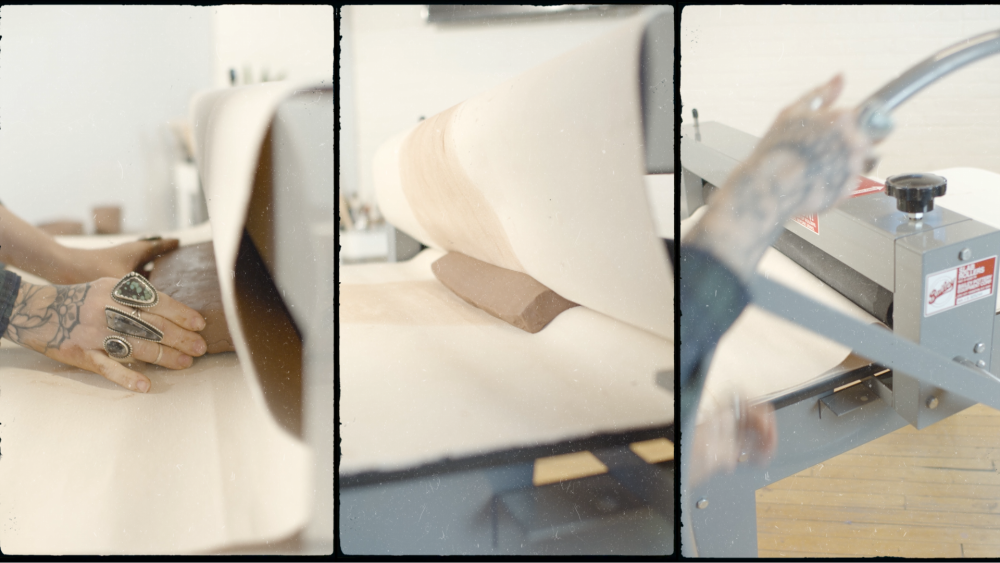
While not every slab roller on the market can handle thick clay in a single pass, many Bailey slab rollers are engineered to do exactly that. A major advantage for professionals, schools, and busy studios.
Models like the Bailey DRD/II 24G Gear Reduced Slab Roller and the DRD/II 24 Direct Drive Slab Roller are designed to roll up to approximately 2 inches of soft, wedgable clay in one pass, saving time, reducing physical effort, and maintaining consistent slab thickness.
This ability to produce usable slabs efficiently helps keep creative momentum moving especially in shared studio environments.
Dual Roller Drive: Precision You Can See
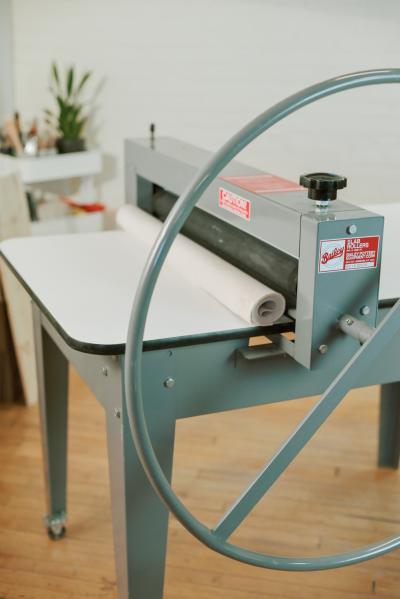
A defining feature of Bailey slab rollers is their dual roller drive system. Instead of relying on a single driven roller, Bailey slab rollers use two steel rollers turning at a one-to-one ratio.
This design:
-
Equalizes compression force between both rollers
-
Prevents side-to-side thickness variation
-
Produces slabs that are consistently even across their entire width
For tile makers, handbuilders, sculptors, and production potters, this precision makes a noticeable difference in finished work.
Built for Real Studios
Bailey slab rollers are engineered with the realities of studio life in mind.
Steel Gears Only
All gear-reduced models use steel gears, never nylon, aluminum or plastic. This ensures long-term durability and reliability, even under heavy use.
Reverse-Threaded Handle Adapter
Gear-reduced models like the DRD/II 24G include a reverse-threaded handle adapter that protects internal gears if the handle is accidentally turned the wrong direction. This is an especially important feature in schools and community studios with multiple new users.
Single-Side Height Adjustment
Roller height is adjusted from one side, keeping both rollers perfectly parallel and ensuring precise slab thickness every time.
Designed for Efficiency and Workflow
Bailey slab rollers are intentionally offset toward one end of the table, requiring less space for feed clay and leaving a larger surface for finished slabs.
-
DRD/II 24G Long Table: up to 48" of finished slab space
-
DRD/II 24 DD Short Table: up to 32" of finished slab space
The bi-level counter design further improves workflow:
-
A lower feed counter exposes more of the bottom roller to grip and compress clay
-
A higher exit counter allows the finished slab to glide out smoothly
Melamine surfaces reduce drag and make cleanup easy when properly maintained.
Gear Reduced vs. Direct Drive: Choosing the Right Model

Bailey offers slab rollers to suit different studio needs:
DRD/II 24G Gear Reduced Slab Roller
-
Increased force through gear reduction
-
Easier rolling with less physical effort
-
Ideal for schools, production studios, and frequent use
DRD/II 24 Direct Drive Slab Roller
-
Handle directly attached to roller shaft
-
Simple, efficient, and powerful
-
Excellent choice for professional and home studios
Both models are capable of rolling thick slabs in one pass and are built with the same attention to precision and durability.
Built to Last
One reason Bailey slab rollers are still found in studios decades after purchase is simple: they’re built to last.
-
Replacement parts remain readily available
-
Designs prioritize repairability over disposability
-
Bailey offers toll-free technical support from real pottery experts
-
How-to guides and maintenance resources are available through the Bailey blog
This long-term support makes Bailey slab rollers a true investment, not a short-term purchase.
Who Bailey Slab Rollers Are For?

Bailey slab rollers are trusted by:
-
Professional potters
-
Schools and universities
-
Community studios
-
Studios looking to reach the next level of production and consistency
If you value precision, efficiency, and equipment designed to grow with your studio, Bailey slab rollers are built for you.
A Legacy of Precision
Bailey slab rollers aren’t just another piece of studio equipment, they're the foundation of the Bailey brand. From Jim Bailey’s first slab roller in 1974 to today’s professional-grade models, the focus has always been the same: innovative design, precision results, and tools that stand the test of time.
Whether you’re running a school studio, producing work at scale, or refining your craft, Bailey slab rollers continue to set the standard for what slab rolling should be.
About the Author

Related Posts
DIY Screenprinted Ring Dish: A Printmaking Meets Clay Project
DRD/II Assembly Instruction Video

Should You Buy New or Used Pottery Equipment?
Meet the Bailey DRD II Series Slab Rollers