Designing Custom Gas Kilns for Pottery Studios and Schools

Designing Custom Gas Kilns for Pottery Studios and Schools
For schools, universities, community studios, and production potteries, a gas kiln for pottery is often one of the most important long-term investments a studio can make.
When firing volume grows and electric kilns are constantly full, many studios begin exploring the benefits of a pottery gas kiln. Gas kilns allow larger loads, greater firing flexibility, and excellent energy efficiency for studios producing large amounts of work.
However, gas kilns are very different from electric kilns. They are rarely a simple off-the-shelf purchase. Every kiln installation must account for the building, the firing goals, and the physical space available.
That’s why Bailey approaches every project by designing custom gas kilns around the needs of the studio.
When Does a Studio Need a Gas Kiln?

A gas kiln for a pottery studio usually becomes the right solution when firing volume increases beyond what electric kilns can efficiently handle.
This situation commonly occurs in universities, art schools, production pottery studios, sculpture departments and community studios with communal firings.
If a studio is running several electric kilns and still struggling to keep up with firing demand, a large gas kiln can allow much larger loads to be fired at once.
Gas kilns are particularly efficient when firing full loads of work, making them ideal for environments where many people are producing pottery simultaneously.
Why Most Pottery Gas Kilns Are Custom Designed

Unlike small studio equipment, a commercial pottery gas kiln must be designed around the building where it will operate.
Several technical factors must be reviewed before a kiln can be installed:
-
Venting complexity
-
Kiln room layout constraints
-
Gas line requirements
-
Safety systems
-
Access into the kiln room for installation
-
Installation logistics
Because these conditions vary from building to building, a gas kiln cannot simply be shipped out without careful consideration. The entire firing system needs to be planned to ensure safe operation and consistent firing results.
This is why Bailey works directly with customers to design a kiln system for the specific studio.
Solving Real Installation Challenges
One of the biggest challenges with installing a large pottery gas kiln is simply getting the kiln into the building.
Studios are often located in older buildings, basements, or spaces with limited access. Bailey specializes in solving these logistical challenges through thoughtful design.


For example, New York University needed a Bailey DLX 18/12 gas kiln installed in a kiln room that could only be accessed through a third-story window. Bailey designed the kiln so it could be transported in sections and craned through the window with only inches to spare.
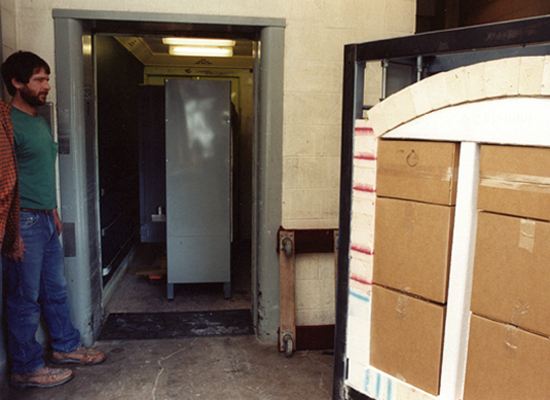
In another project, Ohio State University required multiple large kilns installed in a basement kiln room that could only be accessed through a narrow elevator. Bailey engineered the kilns so they could be disassembled into smaller sections, transported through the elevator, and reassembled in the kiln room.
These kinds of installation challenges are common when designing custom gas kilns for large studios.
Front Loading vs Shuttle Gas Kilns
Most large pottery studios choose between two main styles of gas kiln for ceramics.
Front Loading Gas Kilns
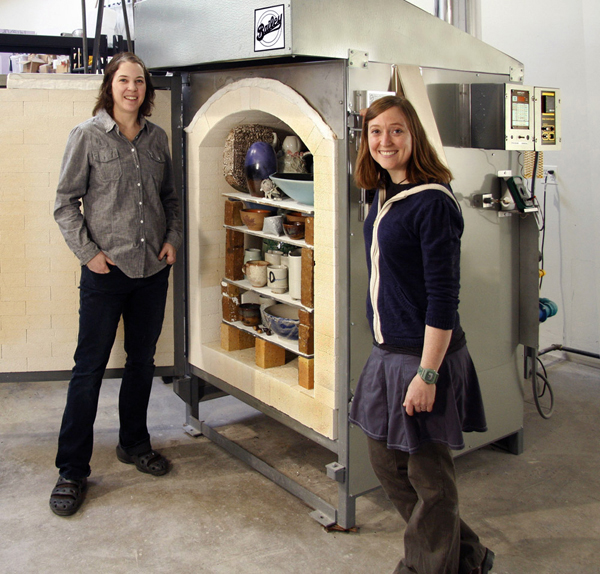
Front loading kilns are a traditional design where shelves are stacked through a large front door. These kilns are commonly used in schools and community studios where firing loads are moderate and consistent.
Shuttle Gas Kilns

Shuttle kilns allow the entire kiln floor to roll out on a cart, making stacking significantly easier. Multiple people can load the kiln at the same time, which improves efficiency in busy studios.
For production potteries and sculpture departments firing large work, shuttle kilns can dramatically improve workflow.
Bailey also manufactures specialized kilns such as soda kilns and foundry kilns. Soda firing produces unique surface effects that cannot be replicated in electric kilns. Because soda firing introduces corrosive materials into the kiln chamber, soda kilns must be specifically engineered for durability and proper fume management. Foundry kilns are commonly used for investment burnout in metal casting.
Gas Kiln Venting and Installation
Proper gas kiln venting is one of the most important aspects of a safe kiln installation.
Every kiln room is different, and venting systems must be designed around the building structure and layout. Important considerations include:
-
Ceiling height and clearances
-
Venting route through the building
-
Building code requirements
-
Whether a direct vertical vent is possible
Whenever possible, direct vertical venting is preferred for gas kilns. However, every installation must be evaluated individually.
Using incorrect venting materials or attempting to install a kiln without proper planning can create serious safety hazards. For this reason, Bailey works closely with customers to determine the correct venting approach before installation.
The Bailey Gas Kiln Design Process
Designing a custom pottery gas kiln begins with understanding the studio and the firing goals.
During the consultation process, Bailey typically reviews:
-
Kiln room dimensions
-
Ceiling height
-
Entry paths into the room
-
Venting routes
-
Fuel type (natural gas or propane)
-
Local building codes
-
Desired kiln capacity
-
Firing style and temperature goals
From there, the Bailey team helps guide the entire project, including:
-
Initial kiln recommendations
-
Venting design guidance
-
Room layout planning
-
Selection of kiln options and controls
-
Installation support
-
Firing support after setup
This collaborative process helps ensure that the kiln performs reliably from the first firing onward.
Built for Long-Term Performance
A gas kiln for pottery studios is a long-term investment, and durability matters.
Bailey gas kilns are designed for:
-
fuel efficiency
-
consistent firing results
-
durable construction
-
replaceable brick components
-
long service life
-
ongoing technical support
Bailey’s forced-air downdraft design also promotes even heat circulation throughout the kiln chamber, helping produce consistent atmospheres and reliable glaze results.
Bailey gas kilns are also fully safety certified under the A.G.A. STD 1-94 and is certified to the C.S.A STD C22.2..
Automation and Control Systems
Gas kilns can also be equipped with optional control systems to support different firing processes.
Options may include:
-
programmable firing controllers
-
oxygen monitoring systems
-
safety shut-off systems
These systems allow studios to customize the kiln to match their firing style, whether they are firing reduction, oxidation, crystalline glazes, or specialty atmospheres.
Talk to Bailey About Your Gas Kiln Project
Installing a gas kiln for a pottery studio requires careful planning, but the result can transform a studio’s firing capacity.
If your studio is reaching the limits of electric kilns, it may be time to explore a gas kiln solution.
All of our kilns are designed, manufactured, and shipped from Kingston, NY, allowing Bailey Pottery to maintain complete control over the process and customize each kiln to fit the unique needs of every studio.
Call Bailey Pottery to discuss your kiln room and firing goals at 1-800-431-6067.
About the Author

Related Posts
From Cardboard to Ceramic: How to Make a Berry Basket

Bailey Pottery Gift Guide 2025: 7 Perfect Gifts for Clay Lovers

The Complete Guide to Setting Up a Home Pottery Studio

Tabletop vs Floor Pottery Wheels