Who Are Pugmills For?


Who Are Pugmills For?
As pottery studios grow, one question may come up:
At what point does it make sense to use a pugmill instead of mixing and wedging clay by hand?
If you’re a hobbyist or beginner, hand wedging should be more than enough to handle your needs. But for schools, production studios, and high-volume potters, clay preparation can quickly become one of the most time-consuming parts of the process.
Understanding who pugmills are designed for and how they compare to hand mixing, can help you decide whether this equipment makes sense for your studio.
What Is a Pugmill?

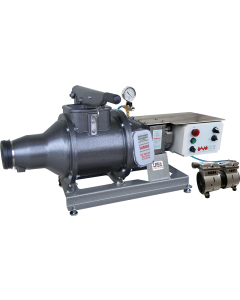
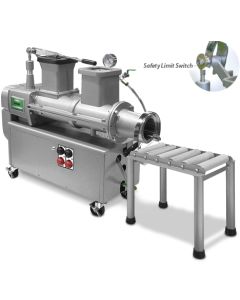
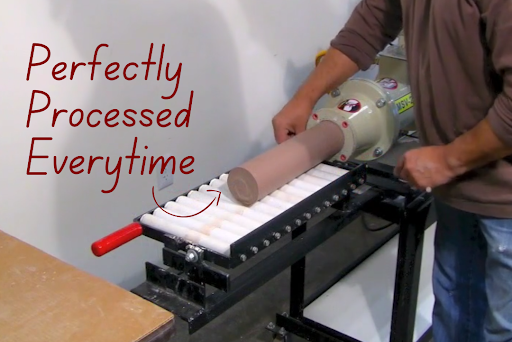
A pugmill is a machine designed to process clay by compressing and de-airing it into usable form. The machine forces clay through an auger system, removing trapped air and producing smooth, workable clay ready for throwing or handbuilding.
There are two primary types of pugmills:
1. De-airing Pugmills
These machines:
-
Compress and “pug” clay
-
Remove air bubbles
-
Produce evenly mixed clay logs
They are ideal when clay is already mixed but needs to be reprocessed into a smooth, air-free state.
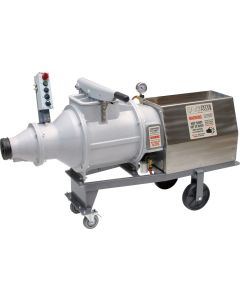
2. Pugmill/Mixers
These machines do more than de-air clay. They:
-
Reconstitute dry or stiff clay
-
Mix water into reclaimed clay
-
Blend scraps and slurry
-
pug the clay into usable form
Pugmill/mixers are designed for studios that regularly recycle clay and need to process larger amounts efficiently.
3. Non-deairing Pugmills
These machines consolidate and extrude clay but do not remove air. These models are often used when clay has already been wedged or when de-airing is not essential to the workflow.
Hand Mixing and Wedging

For many potters, especially beginners or hobbyists, hand wedging works perfectly well.
Benefits of Hand Mixing & Wedging:
-
Low cost
-
No additional equipment required
-
Full control over clay feel
-
Quiet and simple
For smaller studios producing limited work, wedging clay by hand can be manageable. It also gives potters a tactile understanding of clay consistency and moisture.
However, as volume increases, so does the physical demand. When working with a lot of clay and production pugmills begin to make sense.
Who Are Pugmills Designed For?

Production Potters
If you’re making work regularly and recycling large amounts of clay, a pugmill saves time and reduces strain. It keeps clay consistency reliable, which directly impacts throwing efficiency.
Schools & Universities
Educational environments generate a significant amount of reclaim. A pugmill or pugmill/mixer allows instructors to recycle clay efficiently and keep classes supplied with consistent material.
Community & Shared Studios
Studios with multiple users benefit from clay consistency. A pugmill ensures air-free clay and reduces the risk of defects caused by improper wedging.
Studios Focused on Recycling
If sustainability and reclaiming clay are priorities, a pugmill/mixer makes recycling more efficient and less labor-intensive.
Hand wedging works well at a small scale. Pugmills become valuable when time, volume, and consistency matter more.
Is a Pugmill Worth It?
A pugmill doesn’t replace creativity, it supports it.
By reducing time spent on clay prep, studios can:
-
Increase production
-
Improve consistency
-
Reduce physical strain
-
Focus more on making work
For some potters, hand wedging is part of the craft. For others, especially high-volume studios, a pugmill becomes an essential tool.
Pugmills aren’t necessary for every studio, but for the right environment, they transform workflow. The decision ultimately depends on your volume, physical demands, and how much time you want to dedicate to clay preparation versus making.
If you’re considering adding a pugmill to your studio, explore both pugmills and pugmill/mixer combinations to determine what best supports your process.
About the Author

Related Products