Made With A Bailey Interview with Angel R. Vázquez Figueroa


Website: https://sites.google.com/view/angelrvazquezfigueroa/home
Instagram: @angelrvazquezfigueroa

Tell us about yourself, how did you get started working in clay?
My name is Angel Rafael Vázquez Figueroa. I was born and raised in Puerto Rico. As a kid, I was very creative, first through music, studying at a specialized music school through middle and high school. In college, I switched from graphic design to sculpture, and that’s when I started working with clay. I fell in love with the medium instantly, thanks to my professor and artist, Dhara Rivera. Around the same time, I discovered I could combine sound and music with sculpture. That just clicked for me and felt like finding my own artistic language. I continued exploring that, and I even used a Bailey Extruder for the first time, bringing me to create a ceramic sound installation as my graduation piece for my BFA in Sculpture at La Escuela de Artes Plásticas y Diseño de Puerto Rico, and that really set the direction for my work.

Can you tell us about your Bailey equipment and how it helps you create your work?
Having used a Bailey extruder in college, I knew that when I set up my own studio, an extruder would be my first purchase. Living close to the coast, I also needed durable equipment, so I chose the Bailey Stainless Steel 4 Clay Extruder. Soon after, I added the 22-inch Mini Might II Table Top Slab Roller. The extruder allows me to produce hollow forms that can become sound chambers, while the slab roller gives me consistent, even surfaces for building larger structures. Together, they’ve been crucial, not just for speeding up my process, but for making certain forms and shapes I use in pieces and installations possible.

What kinds of concepts or themes do you pursue in your work, and where do you find inspiration for them?
I consistently explore ways to create sound using clay, and how the work interacts with the spectator, whether through touch-triggered sounds or pre-recorded audio. I believe sound occupies space. So, the moment someone enters that space, they’re already interacting with the piece (or perhaps the piece is interacting with them). I’m fascinated by the idea that ceramics, usually seen as silent, static, and fragile, can become instruments or active sound in a room. As for form, I’m drawn to organic shapes, especially the roots of mangroves, a form I return to again and again, drawing from the coastal landscape I’m so close to, thinking about the importance in nature and giving reverence to other artists that have worked with the mangrove form before me.

Do you have a favorite part of the ceramic process?
Well, the moment when the piece is almost, but not quite, bone dry. That’s when I can tap it, blow, or rattle it to start hearing what it might sound like after firing, and to imagine how people will interact with it. Sometimes I even have to begin interacting when the clay is still wet, to know if I need to make changes. That early stage is like a conversation with the material before it hardens into its final form. It’s a little nerve-racking, but it fascinates me every time.

What are you most excited to work on or explore next in your artistic practice?
Right now, I’m excited about developing larger installations once more, experimenting with mixing different clay bodies, and combining ceramics with other materials. All of that opens up new possibilities for how spectators interact with the work, ways I haven’t been able to explore before. I’m particularly curious about creating immersive spaces, so that sound, form, and environment all influence the spectator, where they don't just see the art piece, they become part of it.

Do you use Bailey equipment to create your work? When posting your work on social media, remember to tag your post with #madewithabailey so we can continue to grow our Bailey clay community!
About the Author

Related Posts
DIY Screenprinted Ring Dish: A Printmaking Meets Clay Project
DRD/II Assembly Instruction Video

Should You Buy New or Used Pottery Equipment?
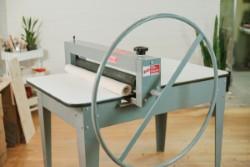
Slab Rollers That Defined An Industry.