A Complete Guide to Pottery Clay


A Complete Guide to Pottery Clay
Choosing the right clay is one of the most important decisions a ceramic artist can make. Different types of clay fire at different temperatures, behave differently during forming, and are suited to specific techniques and finished uses. Whether you’re just getting started or refining your studio practice, understanding the main types of pottery clay will help you achieve better results and avoid common firing and durability issues.
This guide breaks down the most common pottery clay bodies, firing ranges, and specialty clays so you can choose the right material for your work.
What Is Pottery Clay?
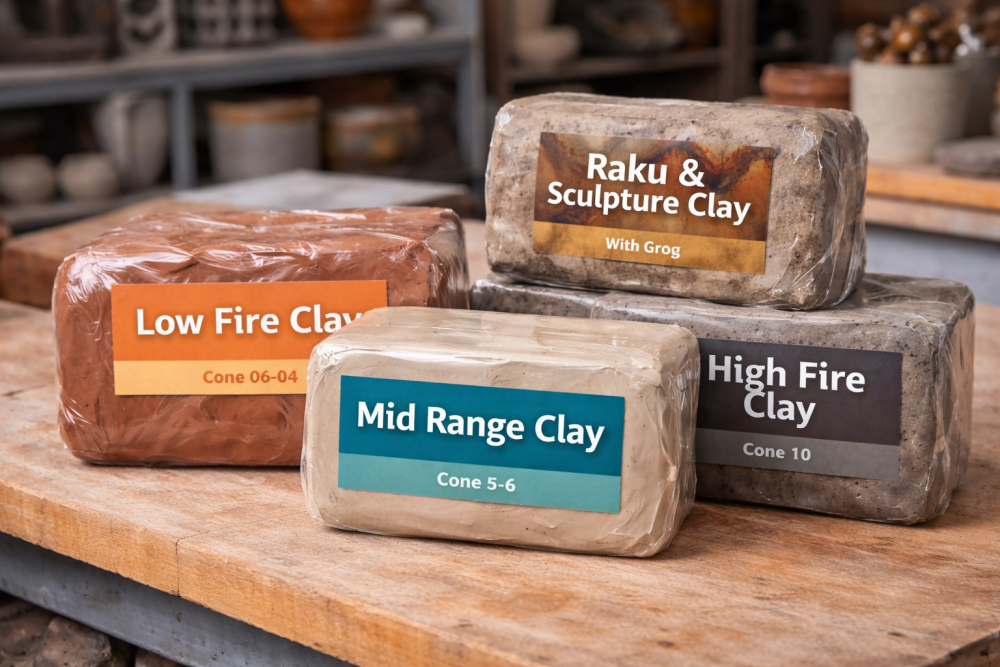
Pottery clay is a natural raw material made primarily of fine-grained minerals that become plastic when mixed with water and harden permanently when fired in a kiln. Different clay bodies are formulated to mature at specific temperatures and are blended with materials like grog, sand, or paper fibers to alter strength, texture, and workability.
The main way clay is categorized is by firing temperature.
What Are Kiln Cones?
When you’re choosing clay, you’ll often see terms like cone 6 or cone 10. These numbers can feel confusing at first, but they’re simply a way to describe how hot the kiln gets when firing clay.
Kiln cones help potters make sure their clay and glazes are fired correctly. Instead of measuring heat by degrees alone, cones measure how much heat the clay receives over time which is called heat work. This helps ensure consistent results.
Low Fire Clay (1800°F - 2000°F / 980°C - 1090°C)
Low fire clay, also known as earthenware clay, matures at cone 06–04. This type of clay is commonly used in schools, beginner studios, and decorative ceramic work.
Key Characteristics of Low Fire Clay
-
Fires at lower temperatures
-
Remains slightly porous after firing
-
Can be easier to work with
-
The clay suits a wide range of bright glaze colors
Because earthenware clay remains porous, it’s ideal for:
-
Planters
-
Decorative ceramics
-
Sculptural pieces
When using low fire clay for dinnerware, caution is advised. It is not as durable or chip-resistant as higher-fire clay bodies unless properly glazed and sealed.
Mid-Range Clay (2100°F - 2300°F / 1150°C - 1260°C)
Mid-range clay matures at cone 5–6 and is the most popular clay type among ceramic artists today. It offers an excellent balance of workability, strength, and durability.
Why Mid-Range Clay Is So Popular
-
Strong and durable after firing
-
Suitable for functional pottery
-
Fires efficiently in electric kilns
-
Wide selection of glaze options
Mid-range clay is commonly used for:
-
Dinnerware
-
Mugs and bowls
-
Functional pottery
-
Home studio work
If you’re looking for a versatile clay that works well for both beginners and experienced potters, mid-range clay is often the best choice.
High Fire Clay (2300°F – 2460°F / 1260°C – 1350°C)
High fire clay matures at cone 10 and is prized for its exceptional durability and traditional ceramic aesthetics. These clay bodies are commonly used in atmospheric firings.
High Fire Clay Is Ideal For
-
Functional ware requiring maximum strength
-
Gas, wood, and soda kiln firings
-
Natural ash and flame effects
Cone 10 clays are often favored by production potters and artists working in reduction or atmospheric kilns. While they require higher firing temperatures, the resulting ceramics are extremely strong and long-lasting.
Raku, Sculpture & Paper Clay
Raku & Sculpture Clay
Raku and sculpture clays contain grog and/or sand, which:
-
Improve structural strength
-
Reduce cracking in large forms
-
Increase resistance to thermal shock
These clays are ideal for:
-
Large sculptures
-
Raku firing
-
Handbuilt forms
Paper Clay
Paper clay contains paper fibers mixed into the clay body, creating unique working properties.
Benefits of Paper Clay
-
Reduced shrinkage
-
Stronger joints
-
Ability to join wet and dry pieces
-
Increased flexibility during construction
Paper clay opens creative possibilities that traditional clay bodies do not allow.
Shop Raku, Sculpture & Paper Clay
How to Choose the Right Clay for Your Project
When choosing clay, ask yourself:
-
What temperature will I fire to?
-
Is the piece decorative or functional?
-
Am I using an electric kiln or atmospheric kiln?
-
Do I need added strength or texture?
Matching your clay body to your firing range and intended use is critical for success.
Finding the Right Clay
Understanding the different types of clay helps you work more confidently and avoid common firing mistakes. From low fire earthenware to durable mid-range stoneware and traditional high fire clay, each clay body has a specific purpose.
Whether you’re just getting started or refining your studio practice, Bailey Pottery offers a wide selection of pottery clay and raw materials to support every firing range and technique.
Explore our full clay selection and find the perfect clay for your next project.
About the Author

Related Posts
From Cardboard to Ceramic: How to Make a Berry Basket

Made With A Bailey Interview with Mike Griffin