1-800-431-6067

Clay - About Our Clays and Chemicals

Material Safety Data Sheets (MSDS) are available on CD-ROM's in PDF format. Please call 1-800-431-6067 for more details. A CD-ROM disk can be enclosed with your order upon verbal request.

Moist Clays

Click Here to Purchase Dry Clays and Chemicals | Go to Standard Clays

We offer a wide variety of carefully selected, pre-mixed clays from two reputable manufacturers:

Standard Clay Co.
of Pennsylvania and

Tucker's Pottery Supply
from Ontario, Canada.

We’ve provided Standard Clay for over 20 years to our customers who have come to depend on its quality and variety for all their production needs. Packaged as two 25 lb. blocks per 50 lb. box, each block is pugged, de-aired and sealed in plastic. Boxes are clearly marked with name, cone rating, batch # and date. Certified AP Non-Toxic in its moist form, Standard Clay is a favorite with schools and potters alike.

Recently, we’ve introduced our local customers to Tucker’s Clay and their response has been tremendous! Tucker’s is the most thoroughly tested and monitored moist clay we’ve found on the market, with technical support that is second to none. Their wide variety of bodies and firing ranges insures a clay to meet everyone’s needs. Tucker’s formulas have been Certified AP Non-Toxic in their moist form, and are sure to become a favorite for schools and studios alike. Packaged as two 22 lb. de-aired pugs in heavy duty plastic bags per 44 lb. box & in stock now at our Kingston, NY warehouse, you owe it to yourself to try Tucker’s Clay!

When choosing a clay, first determine what temperature range you will be firing. The temperature range you select is determined by the type of work you do and the equipment available to you. We strongly recommend that you select clays and glazes that mature in the same temperature range, especially if you are producing functional work.*

There are three basic temperature ranges:

Low Fire/Earthenware
Cone 06-3 (1850°-2135°F)

Mid Range/Stoneware & Porcelain
Cone 4-7 (2160°F-2290°F)

High Fire/Stoneware & Porcelain
Cone 8-10 (2315°F-2380°F)

*NOTE: High Fire clay bodies are often described as having a “wide firing range” (eg. Cone 2-10). Any clay body can be fired below its maturation point for various reasons, however it may not be suitable for functional ware when underfired in this manner. A High Fire clay may have a 2% absorption rating at C/10, but 6% or more at C/4. For functional work, a general guideline is that absorption should be 3% or less for stoneware and 1% or less for porcelain. A clay that is too porous will tend to absorb excess moisture and contaminants during use. Underfired clay bodies also tend to have more glaze/body fit problems such as crazing. A crazed glaze allows moisture and contaminants to seep through into the underlying clay and become trapped, causing premature weakening of the piece and possible bacterial growth if food items are involved. We have found that using glazes and clays formulated to mature at the same temperature reduces the occurrence of some of these problems when durable, functional work is desired.

A Word About Mines

Most of the chemicals used in clay bodies and glaze are mined from the earth for industry, not for potters. Some materials will pick up impurities from time to time, which may cause slight changes in clays and glazes. There is nothing we can do about this, as the mines will not insure absolute uniformity of materials. We cannot be responsible for variations, but if you have a very dramatic change, please call us immediately.  If you have very specific requirements for your clay or glazes, we recommend you test each new batch of clay or bagged chemical to avoid possible disappointment. Our moist clay suppliers do everything possible to maintain a high level of quality and purity with their clays, as do we with our bagged chemicals.

+ SAFETY FIRST +

Many of the raw materials used by potters range in toxicity from mild to serious. Hazardous materials including dusts, fumes, and vapors can enter the body through inhalation, ingestion, and absorption through the skin. Toxic materials are most dangerous in the form of dry dust, airborne mists and kiln fumes. All persons using clay and glaze related materials should be aware of the potential health hazards and protect themselves from exposure. Some of the most potentially toxic materials include long term inhalation of free silica which is contained in clay dust, flint, feldspar and talc. The metallic oxides, stains and  carbonates through ingestion, absorption, or inhalation, can cause illness, especially barium, cadmium, chrome, cobalt, lead, lithium, manganese, nickel, potassium, selenium and vanadium. Care must be taken to minimize exposure especially if you intend to spend a lifetime around these materials. You must take a responsible attitude and wear masks and protective clothing when necessary, and keep a clean, dust-free studio.

See “Safety & Hygiene” section of this web site for more information.

Some Safety Tips to Follow:

Keep Your Workspace Clean
  • Keep chemicals in covered containers, clean frequently using a wet mop or toxic dust vacuum. Never sweep dry clays and chemicals

Good Personal Hygiene

  • Don’t smoke or eat in your workspace
  • Wash skin and clothing frequently

Wear Protective Clothing and Masks When Necessary

  • Wear a NIOSH-approved respirator when mixing clay or glazes and when spraying glazes
  • Wear heat resistant clothing, gloves, and goggles when firing kilns
  • Wear rubber gloves to protect hands from chemicals


Ventilation
  • Isolate kilns, spray booths and dust producing materials
  • Install exhaust fans where necessary

Know Your Materials

  • Be aware of the toxic materials you use. (Review MSDS Sheets & see “Recommended Reading”)
  • Keep Clean; Stay Healthy!!

Recommended Reading:

C-300-38
Artist’s Complete Health & Safety Guide
by Monona Rossol

C-300-222
Safety in the Artroom
by Charles Qualley

(See Master Media Index for Bailey’s complete category listing.)

Slip Clays

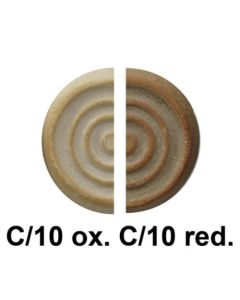
Albany Slip Substitute — Sheffield Pottery’s formulation based on the chemical makeup of the original Albany Slip, which produces a glaze nearly identical to 100% Albany at Cone 10. May be used alone or as a component in clays or glazes. Testing is recommended, but our customer feedback has been excellent!

Alberta Slip — From The Archie Bray Foundation, a beautiful dark slip clay that can be substituted 1 to 1 for Albany Slip in recipes. Alberta Slip is extremely craze resistant, applies well to greenware or bisque, and can be used with ceramic stains for endless variations. At 325 mesh, it mixes and sprays very well. It is fusible and, when mixed only with water, produces beautiful satin-gloss brown glazes at Cone 10 ranging from “beanpot” to temoku, depending on atmosphere and the underlying clay body. At Cone 6, 90% Alberta and 10% Frit 3134, yields similar results. Testing is recommended.

Ravenscrag Slip — From the Archie Bray Foundation. Although sometimes referred to as “Alberta Slip II,” Ravenscrag is actually quite the  
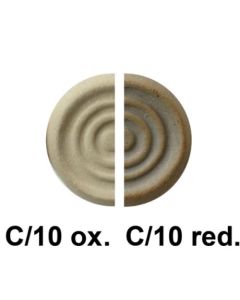
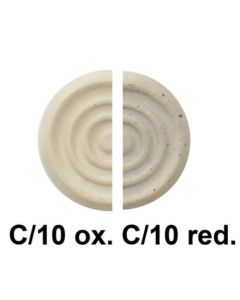
opposite. This is a light-colored, fine-grained, silty clay with low plasticity and a high melting point (Cone10). Ravenscrag has excellent working properties and can be applied with ease to greenware or bisque. Even multiple layers won’t crack or crawl during drying. 100% Ravenscrag produces a light-colored silky matte surface at Cone 10. Small amounts of feldspar can be added to improve flow and smooth the surface (approx. 5%) or add gloss (approx. 10%): Boron frits don’t work well with this material at Cone 10. For Cone 6, the addition of Ferro Frit 3134 will yield a silky matte (approx. 10%) or add gloss (approx. 20%). Colorants and opacifiers can be added for infinite variations and effects. Because Ravenscrag is more than 70% clay, it requires sufficient fluxing and heat work to allow complete burn-out of gasses during firing. Ravenscrag contains very little sodium and plenty of magnesia, making it a relatively problem-free base for glaze development.

Blackbird (Barnard Slip) — An iron-saturated, self-glazing slip clay. Used alone as a slip or stain or as a colorant in glaze and clay recipes, it fires brown/black depending on temperature and atmosphere. Vitrifies at Cone 4-10.

Earthenware

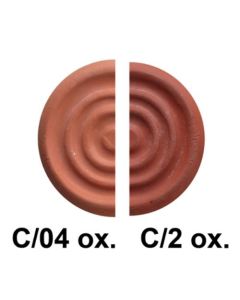
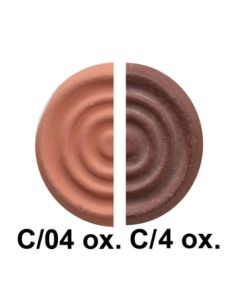
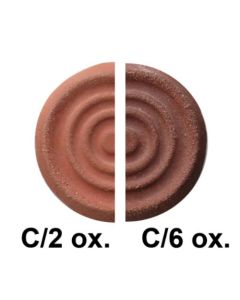
Red Art — Fine-particle, low fire (Earthenware) clay with a very high iron content. Not very plastic on its own but is used frequently in terra cotta clay bodies and, in smaller amounts, for color in Hi Fire Stonewares. Red Art will flux at high temperatures and can be used in slip-glaze recipes. Approx. 14% shrinkage at Cone 1. Fires beautiful red to red/brown depending on temperature.

Ball Clays

Kentucky OM4 — Very plastic secondary clay used in many clay bodies and glazes. Approx. 15% shrinkage @ Cone 10. Fires grey-white.

Mississippi M&D — Very fine-particle Ball clay used to improve plasticity and strength in clay bodies; however, usually limited to <10% of a formula since larger quantities may increase warpage and shrinkage.

Tennessee No. 1 (SGP) — A plastic secondary clay used in both glazes and clay bodies. Approx. 14% shrinkage @ Cone 10. Fires white.

Tennessee No. 5 — Plastic ball clay used both in clay and glaze formulas. Approx. 15% shrinkage @ Cone 10. Fires grey-white.

XXSagger — Fine grain secondary clay with good plasticity and a very low iron content. Used mostly in clay bodies. Approx. 13% shrinkage @ Cone 10. Fires light cream to white.

Gold Art — Air-floated secondary clay, very plastic but with a high sulphur content. Used both as a ball clay or fire clay. Approx. 7% shrinkage @ Cone 8. Fires a light cream color.

Fire Clays

APGreen (APG) Missouri Fire Clay — Sedimentary clay with good vertical plasticity used mostly in Cone 10 bodies as a “refractory clay.” Sometimes used as a mortar when mixed with water. Approx. 11% shrinkage @ Cone 10. Fires light cream color.

North American Fire Clay — A non-plastic refractory clay. Fires light tan.

Hawthorne Fire Clay — A fine particle Missouri Fire Clay with good plasticity. Approx. 10% shrinkage @ Cone 10. Fires light.

Cedar Heights Bonding — Strong, fairly plastic fire clay. Low in sulphur, cleaner than AP Green or Hawthorne Bond.

Kaolins

EPK (Edgar Plastic Kaolin) — A fine-particle, unusually plastic kaolin - the most common choice when a glaze or clay formula requires kaolin but does not specify a type. Approx. 13% shrinkage @ Cone 9. Fires creamy white.

Tile #6 Kaolin — Very clean, plastic kaolin with excellent green strength. Good translucent qualities, used frequently in porcelain bodies. Fires very white.

Georgia Diamond — Replacement for Georgia Pioneer Kaolin which is no longer mined. Clean firing with high green strength. An excellent kaolin for glaze applications. Approx. 10% shrinkage @ Cone 10. Fires white.

Grolleg English Kaolin C (China Clay) — Mined in England, one of the purest kaolins with excellent translucent properties but poor plasticity. Most often used for translucent porcelain bodies. Approx. 14% shrinkage @ Cone 9. The whitest firing Kaolin we carry.

Velvacast — A coarse particle Kaolin used in casting slips to reduce warpage and improve mold release properties.

Raw Material Descriptions

Click Here to Purchase Dry Clays and Chemicals

Alumina Hydrate AI(OH)3 — Used as a source of alumina in glazes, alumina hydrate promotes opacity and mattness and increases hardness and durability. Very refractory. It can also be used in kiln wash or to protect kiln furniture in salt firings.

Barium Carbonate BaC03 — The best way to introduce barium oxide in glazes, barium carbonate functions as a high temperature flux. It can produce satin matt glazes, but an excess will cause a rough, dry glaze surface. TOXIC.

Bentonite (325 mesh) — A highly plastic clay which is used in small amounts as a plasticizer in clay bodies and a suspension agent in glazes. More than 3% can cause cracking of the unfired glaze layer due to the high drying shrinkage rate.

Bone Ash Ca3(PO4)2 — Typically made from ground, calcined animal bones, bone ash is a source of calcium phosphate. It is used as a flux in clay bodies - notably Bone China, which is known for its thinness and translucency. Also used as an opacifier in glazes and to assist in formation of opalescence (as in Chun glazes).

Borax Na2O•2B2O3 — Source of Boric Oxide and Soda in glazes. Small amounts can increase fluidity of a glaze; larger amounts can lower the maturing temperature.

Calcium Carbonate CaCO3 — (see Whiting)

CER Veegum — (Glaze Hardener) Used in glazes as a suspending agent, viscosity stabilizer and surface hardener (for safer handling of unfired glazed ware). Recommended use: add 1.0% to 1.5% based on the dry weight formula. Disperse in water or add directly to dry mix.

Chrome Oxide (Green) Cr2O3 — A powerful and versatile glaze colorant that can produce a variety of colors including green, yellow, pink, brown, and red - depending upon glaze formula, atmosphere, and temperature of firing. At temperature above cone 6, chrome oxide becomes volatile and may affect adjacent ware in the kiln.

CMC Powdered Gum — An organic cellulose gum used in slips and glazes as a binder, thickener, and suspension agent. Recommended use: Mix 1 to 2 tablespoons per gallon of warm water and let stand for 24 hours. Use approximately one part of this CMC Solution to 2 parts water when mixing a glaze to improve brushability. Use lesser amounts for dipping, pouring or spraying glazes. (CMC will increase drying time which is not always beneficial to these application techniques).

Cobalt Carbonate CoCO3 — Used as a slip and glaze colorant, cobalt carbonate produces various shades of blue or purples where manganese is present. Because of its extremely fine particle size, it is more easily dispersed in glazes than cobalt oxide.

Cobalt Oxide Co3O4 — Cobalt oxide is the most powerful ceramic pigment available. Used in slips and glazes in very small amounts, it produces strong blue colors. Because of its intense coloring power and larger particle size, it can cause a speckled effect.

Colemanite — (see Gerstley Borate)

Copper Carbonate CuCO3 — A versatile, fine particle glaze and slip colorant which can produce greens, blues, or reds depending upon glaze composition and firing conditions.

Copper Oxide (Black) CuO — More concentrated than copper carbonate, copper oxide is a strong colorant and a flux. In an oxidizing or neutral atmosphere it produces greens. Under reduction conditions red colors can be obtained. When used in an alkaline glaze copper oxide gives a turquoise blue color. Above 1900 degrees F copper oxide becomes increasingly volatile and can affect the color of other glazed pieces in the kiln.

Copper Oxide (Red) Cu2O — Made by heat treating Black Copper Oxide. Red Copper is insoluble in water, making it more difficult to work with.

Cornwall Stone (Cornish Stone) — An English feldspathoid used as a flux in clay bodies and as a major constituent in glazes. Like feldspar, Cornwall Stone introduces the fluxes potash, soda and lime into a glaze, but with more alumina and silica than is introduced by feldspar.

Darvan® No. 7-N — A long-chain sodium polyelectrolyte best suited to deflocculate low-fire, white “hobby” clays. It produces slips with a long casting range, and excellent mold-release properties. Ware can be removed as soon as 1-2 hours (depending on size) or left as long as 6-24 hours (provided that the drainhole is covered). This allows larger and/or more intricate forms extra set-up time for safer handling and reduced warpage. Slips made with Darvan® No. 7-N have an increased shelf life because they don’t thicken or become thixotropic upon standing (a common problem with many “hobby” slips). During casting, there is minimal absorption of Darvan® No. 7-N by the plaster resulting in greatly increased mold-life as well as scrap that can be easily reclaimed - sometimes by adding only water. Darvan® No. 7-N is very powerful requiring only a .5 to 1% addition (based on dry body weight) to the formula. Even so, adding excess Darvan will not cause the slip to re-flocculate. In addition, Darvan® No. 7-N is an excellent deflocculant/dispersing agent in glazes to be applied by spraying, providing increased fluidity without the addition of excessive amounts of water, and keeping the materials evenly-dispersed in the glaze while you work.

Darvan® No. 7-N has a shelf life of 1 year or more if stored in a tightly closed container. Temporary freezing will not effect its properties; however, the thawed material must be thoroughly re-mixed before using.

Darvan 811 — A short-chain sodium polyelectrolyte used to deflocculate Mid to High Fire Porcelain and Stoneware slips as well as Low-Fire Red casting slips. Darvan 811 has many of the same benefits as Darvan No. 7: Ionger casting range, increased mold life, easy reclaimability and improved viscosity stability. In addition, Darvan 811 also reduces “hard spots”, and eliminates calcium/silica scum for better glaze adhesion. Darvan 811 can also be used in glazes as a deflocculant/dispersing agent to improve working properties during spray application. It has a shelf life of 1 year or more and is not adversely effected by short-term freezing. Thaw completely and re-mix thoroughly.

Deflocculant — Material that acts on the molecular structure of clay causing clay to flow as a liquid without the addition of excessive amounts of water. Primarily used in the production of casting slips to create and maintain fluidity without the increased shrinkage and weakness that excess water will cause in the resulting greenware. See also Sodium Silicate, Darvan No. 7 & Darvan 811.

Dolomite CaMg(CO3)2 — Dolomite is a naturally occurring mineral that contains calcium carbonate and magnesium carbonate. It is used as a flux in high temperature glazes wherever both magnesia and lime are required.

Feldspar, Custer — A potash feldspar used in both clay bodies and glazes. It can function as a flux or as a refractory depending upon formula and firing temperature.

Feldspar, Kona F-4 — A soda feldspar used in clay bodies and glazes where a sodium flux is required.

Feldspar, G-200 — A potash feldspar used in glazes and clay bodies.

Flint, Silica, Silicon Dioxide SiO2 — The fundamental constituent of glazes and component of clay and other ceramic raw materials. Used in glazes, flint will raise the maturing temperature, increase the viscosity of the melt, and increase hardness and craze-resistance. The addition of silica to clay bodies makes the fired clay harder and more durable and improves glaze fit.

Frits — Frits are combined raw materials that are mixed, fired, melted, crushed and ground into a powder. The reason for fritting is to render soluble materials insoluble; decrease toxicity of raw materials such as lead, barium and zinc; to reduce fusion point of glazes; and to avoid volatilization of unstable substances. Frits are often used in glazes as fluxing agents but can also be used in slips and clay bodies. (See chart for composition).

*Gerstley Borate 2CaO•3B2O3•5H2O — A sodium/calcium/borate compound used as a flux in glazes. It is used to introduce boric oxide in an insoluble form and as a more stable substitute for colemanite.

*Please Note: Gerstley Borate is no longer mined: CALL for information on Substitutes.

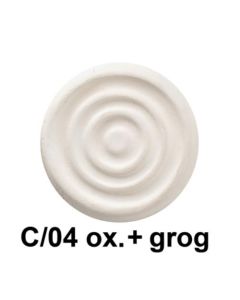
Grog — Ground, fired clay added to clay bodies to improve workability and strength and to give texture. The addition of grog also reduces shrinkage, warpage, and cracking in drying and firing.

Ilmenite FeO•TiO2 — The ore of titanium and iron. Granular ilmenite is used to produce a speckled effect in clay bodies and glazes. In small amounts it can promote or “seed” the growth of crystals in glazes - especially those containing rutile.

Iron Chromate FeCrO4 — Form of Iron usually used when darker browns and red-browns are desired.

Iron Oxide (Red) Fe2O3 — Ferric oxide. Generally used as a colorant in clays and glazes where iron is required. It produces a broad range of color - from yellows, browns, red-browns, and blacks in oxidation to grays, blues, greens, and blacks in reduction. Red iron has a finer particle size than black iron which makes it disperse more easily in a glaze. In mid-high temperature ranges iron oxide will act as a flux, noticeably lowering the firing range of glazes.


Iron Oxide (Black) FeO — Ferric oxide. Produces the same range of colors as Red Iron when used in glazes but is preferred by many potters when making Celadon glazes for Reduction firing.

Kiln Wash — A refractory mixture of kaolin and flint or alumina applied to kiln floors and furniture to prevent adhesion of melted glaze.

Lithium Carbonate Li2CO3 — A slightly soluble source of lithium. When used as a flux in glazes it can extend firing range, reduce thermal expansion, and promote brilliant colors.

Magnesium Carbonate MgCO3 — This is used in glazes as a source of magnesium oxide. A refractory at low temperatures, it becomes an active flux at high temperatures. Magnesium carbonate produces matt surfaces, increases glaze viscosity, and improves adhesion of glaze to clay.

Manganese Dioxide MnO2 — A fine particle ceramic colorant which usually produces browns in glazes but can give purples in combination with cobalt or alkaline fluxes.

Molochite — A white porcelain grog. Reduces shrinkage, warpage, and cracking, while maintaining color in white clay bodies.

Nepheline Syenite K2O•Na2O•4AI2O3•9SiO2 — A useful substitute for feldspar, nepheline syenite melts at a lower temperature. It is widely used as a flux in both clay bodies and glazes.

Nickel Carbonate NiCO3 — When used alone as a glaze colorant, nickel carbonate usually produces greenish or brownish grays. It is especially useful as a modifier for brighter colorants to produce more muted tones.

Nickel Oxide (Green) NiO — More concentrated than nickel carbonate, nickel oxide is used in small percentages to produce mute colors in glazes. It is refractory and can raise the maturing temperature of glazes if used in large amounts.

Nickel Oxide (Black) Ni2O3 — Reverts to Green Nickel at around 1100°F when used in a glaze producing very similar results. However, increased amounts may be necessary if substituting Black for Green in a recipe.

Nylon Fibers (Dupont P105) — A fiber which can be added to clay bodies to increase wet strength. Especially useful for handbuilding large slab forms, the fibers create an inner structure in the clay allowing for easier handling of larger slabs. The fibers are approximately ½ inch long and burn out during firing. Recommended use: Add 1.5% to 2% by weight. Fibers are most easily added to dry mix but can be wedged into wet clay if necessary.

Ochre, Yellow — An iron oxide ore used as a colorant in slips, clay bodies, and glazes. Produces colors similar to iron oxide.

Plaster, Pottery (K-59) — The standard of the industry, equivalent to No. 1 Pottery Plaster. Recommended for most slip casting applications for strong, long-lasting molds. Measuring Guidelines: For slipcasting molds, throwing bats and wedging tables, a good water to plaster ratio is 1:1-3/8 by weight. Using 1 Lb. as the weight of 1 PT of water, some general ratios are:

1 PT water to 1 Lb 6 oz dry plaster
1 Qt. water to 2 lbs 12 oz dry plaster
1 Gal water to 11 Lbs dry plaster

To estimate how much water you’ll need, use this guideline:

1 Qt. water for every 80 cu. ins. of mixed plaster. Therefore, compute the volume of your form in cu. ins. (L”xW”xH”) and divide by 80; this equals the # of Qts. of water required). Mixing Instructions: Measure the appropriate amount of water into a large container and the correct amount of plaster as computed above in a separate container. Slowly sift or sprinkle the plaster evenly over the surface of the water and allow to sink. You should see a noticeable increase in the length of time the plaster floats on the surface before sinking as additions continue. When all the plaster is added and submerged, mix slowly but thoroughly - be sure to break up all chunks and try not to introduce extra air into the mix. (Use your hand or a power mixer on a low setting). Continue mixing until the plaster thickens slightly (until a finger drawn across the surface leaves a trace trail), then pour slowly into your form. Tap or lightly shake the form to bring air bubbles to the surface. Let set, remove from form and dry completely before using.

Pyrophyllite Al2O3•4SiO2•H2O — A hydrated aluminum silicate used in clay bodies to decrease thermal expansion, shrinkage, and cracking and to extend firing range.

Rutile TiO2 — A natural ore containing titanium dioxide and a small amount of iron. Used as a slip and glaze colorant, rutile produces creams, tans and browns in oxidation and various bright oranges and blues in reduction. It tends to produce mottled or broken colors, increase opacity, and promote the growth of crystals in glazes.

Silica — (see Flint)

Silica Sand — A very coarse form of silica used to add texture and strength to clay bodies.

Silicon Carbide (250 mesh) SiC — In powdered form, used as a glaze ingredient for special effects such as crater glazes and localized reduction.

Silicon Carbide - Ultrafine (1000 mesh) SiC — Specially fine-ground for improved dispersion. Recommended for producing more even, consistent localized Reduction effects such as are required to produce “Oxidation Copper Reds.”

Sodium Silicate — A water-soluble solution of Soda and Silica traditionally used to deflocculate casting slips. Often used in conjunction with Soda Ash, it is equally effective in both high and low temperature slips. Care must be used when using Sodium Silicate because it will actually re-flocculate the slip if too much is added. Sodium Silicate is also readily absorbed by plaster leading to deterioration and the eventual breakdown of slipcasting molds.

Soda Ash Na2CO3 — Sodium Carbonate. Frequently used as a soluble deflocculant in slip-casting bodies, it increases strength and reduces shrinkage.

Spodumene Li2O•AI2O3•4SiO2 — A lithium feldspar used in glazes to reduce shrinkage and lower vitrification temperature. In clay bodies it decreases thermal expansion.

Strontium Carbonate SrCO3 — A glaze flux similar to Whiting which promotes more craze and scratch resistant glaze surfaces. Currently a popular substitute for Barium Carbonate in glazes (.75 parts Sr to 1 part Ba is a recommended starting point for testing).

Superpax ZrO4• SiO2 — A fine-particle zircon opacifier used in slips and glazes. Discontinued - substitute Zircopax Plus.

Talc 3MgO•4SiO2•H2O — Useful as a flux in low temperature clay bodies and in glazes at both high and low temperatures. Also functions as an opacifier in glazes and reduces thermal expansion.

Tin Oxide SnO2 — Dependable and widely used as a glaze opacifier. Tin oxide has a refractory effect on glazes and can increase craze resistance.

Titanium Dioxide TiO2 — Used primarily as an opacifier in glazes, titanium dioxide produces matt surfaces. It is also used as a seeding agent in crystalline glazes. (Rutile is titanium with iron impurities).

Umber, Burnt — A hydrated ferric oxide with manganese dioxide and clay. It can be used as a slip or clay body colorant and produces a reddish-brown color.

Veegum-T — An iron-free colloidal magnesium aluminum silicate used as a plasticizer-lubricant in white clay bodies. A good binder for extruder bodies. Veegum T can also be used as a suspending agent for glazes. Recommended use: add 0.5% to 1.5% based on the dry weight formula. Should be used in water as a dispersion addition.

Volcanic Ash (Pumice) — A naturally occurring, fine particle material used in glazes to replace feldspar and flint. Single color changes may result from the iron oxide content of the ash.

Wax Resist — Water-soluble wax emulsions used to resist glazes (underglaze, stains, etc) on footrings, lid flanges and lids or for masking specific areas of a piece for multi-layered glazing techniques. Once applied, wax cannot be removed except by firing off in the kiln.

Whiting CaCO3 — Calcium carbonate. Whiting is a widely used source of lime in glazes and a primary high temperature flux.

Wollastonite CaSiO3 — A naturally occurring calcium silicate; wollastonite is used in both clay bodies and glazes to reduce drying and firing shrinkage and improve fired strength.

Zinc Oxide ZnO — Generally used as a flux in high temperature glazes, zinc oxide lends opacity and encourages crystal growth when used in large amounts. A common constituent of matt glazes, it also has a marked effect on colorants, promoting brilliance with copper and dulling iron and chrome. Zinc oxides can assist in reducing crazing of glazes. Not recommended for use with some ceramic stains.

Zircopax ZrSiO4 — A zirconium silicate used as a slip and glaze opacifier. Discontinued - substitute Zircopax Plus.

Zircopax Plus — Current substitute for Superpax and original Zircopax. A fine-particle zirconium silicate used as a glaze and slip opacifier. Disperses very easily. Substitutes 1:1 for Superpax; may require less when substituted for original Zircopax.

FERRO LEADLESS FRITS - PERCENTAGE COMPOSITIONS

Frit No. Coeff. of Exp. Fusion K2 Na2O CaO ZnO Al2O3 B2O3 SiO2 F Fusion/Flow Temp °F
3110 10.1 2.3 15.3 6.3 3.7 2.6 69.8 1400/1700
3124 7.9 0.7 6.3 14.1 9.9 13.7 55.3 1600/1750
3134 9.6 10.3 20.1 23.1 46.5 1450/1600
3195 6.5 5.7 11.3 12.1 22.4 45.5 1500/1700
3269 11.4 8.1 11.1 0.1 1.0 13.2 15.2 49.71 1.6 1400/1500
5301 11.4 5.5 14.0 2.4 12.1 12.5 44.5 9.0 1400/1500

NOTE: Please test all frits before using. Ferro allows small differences in composition from batch to batch and this can affect the results of sensitive glazes.

PLEASE READ!
Many materials used by potters in glazes and clay are potentially hazardous substances. We at Bailey feel you should take precautions to minimize exposure.

1. Handle materials carefully. Avoid spillage. Keep materials covered.
2. Wear a NIOSH approved respirator. Avoid breathing all dusts.
3. Wear rubber gloves when glazing or painting with oxides or stains.
4. Keep your workspace clean, free of dust.
5. Wash your workclothes separately from other clothing.
6. Do not eat or smoke in your workspace.
7. Use a wet mop for cleaning or a toxic dust vacuum cleaner.

Material Safety Data Sheets (MSDS) are available on CD-ROM's in PDF format. Please call 1-800-431-6067 for more details. A CD-ROM disk can be enclosed with your order upon verbal request.

SEE RAW MATERIALS ADVISORY

Click Here to Purchase Dry Clays and Chemicals | Go to Standard Clays | Go to Tucker's Clays

TOP | MASTER INDEX


© 2008 Bailey Pottery Equipment Corporation