





















|
Spectrum Dry Glaze Mixing
Instructions
Safety
The first thing to remember about any glaze is that in the dry powder form
it is hazardous as dust so you must take care not to breath it. This is
true regardless of whether the liquid form of the glaze is rated lead free
and non-toxic or otherwise. Therefore when mixing dry glaze always work in
a properly ventilated work area and wear a respirator and safety goggles.
General
Spectrum High Fire Cone 4/6 glazes are available dry by the Lb. or wet in
pints and gallons. Spectrum standard wet glazes are all prepared for
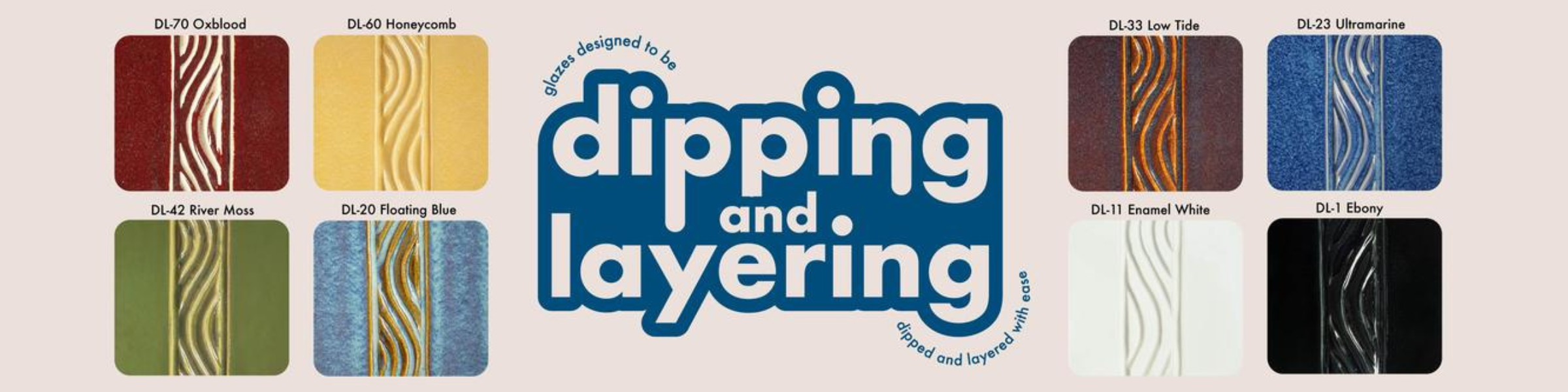
brushing application and dry glazes are formulated for dipping
application. Also, all of the High-Fire and Low-Fire glazes a are
available in dry form in 50 Lb. bags and can be prepared for brushing,
dipping, or spraying application.
Preparing
When preparing to mix either a 10 Lb. or 50 Lb. bag of dry glaze, be aware
that even though the powder is thoroughly mixed when it leaves the
factory, the components will tend to segregate as they are shaken about in
shipping. The heavier components if the glaze will settle to the bottom of
the bag. Therefore, when you are mixing dry glaze, either use the entire
bag, or if you only want to mix up part of the bag, make sure the dry
glaze is thoroughly mixed. One way to mix up the dry glaze is to put it in
a clean, dry 5 gallon plastic pail with
|
a sealing lid. Rolling the pail on
the floor for a minute should sufficiently mix the powder. Do not open the
pail lid immediately after mixing; wait a few minutes for the dust to
settle.
Mixing
When mixing a glaze always use a clean vessel whose volume is at least 25%
greater than the amount of glaze you expect to finish with. Put 90% of the
required amount of water into the mixing vessel. Then immerse the mixer in
the water and turn it on. Slowly feed the powder into the agitated water.
The remaining 10% of water can be added in if the glaze becomes too thick
to mix properly. If the additional water is not needed hold it back to the
end and add it gradually to adjust the viscosity and density. Mixing
should be done with a powered mixer, which can be as simple as a drill
with a paddle on the end of the shaft. Manual mixing is not recommended.
After the glaze is thoroughly mixed it should be screened through an 80
mesh screen to remove any coarse particles.
How Much Water Do
I Need?
The following recommendations are just to establish a starting
point and the actual quantities required may vary.
The chart below has some typical examples
of the amount of water that is required to mix dipping glazes and the
approximate amount of glaze that will be made. Additional information can
be found on the Spectrum®
Guide to Adjusting Glaze Viscosity and Density.
|